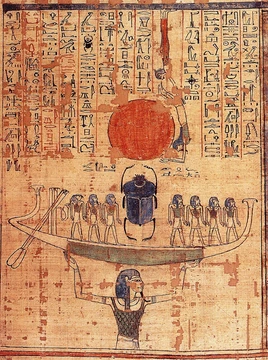
Sekhmet
Lion-headed goddess of war, medicine, and solar power.

Sekhmet (or Sachmis, from Ancient Egyptian: Saḫmat; Coptic: Sakhmi) is a warrior goddess and goddess of medicine in Egyptian mythology. She is also a solar deity, sometimes given the epithet 'the eye of Ra,' and is often associated with the goddesses Hathor and Bastet. As the daughter of the sun god Ra, she acted as the vengeful manifestation of his power and is among the more important goddesses in the Egyptian Pantheon.
- field
- Egyptian mythology
- nationality
- Ancient Egyptian
- known_for
- Warrior goddess, goddess of medicine, solar deity, Eye of Ra
- associated_with
- Ra, Hathor, Bastet, Ptah, Nefertum, Maahes
Lore & Background
Sekhmet is the daughter of the sun god Ra and is said to breathe fire, with the hot winds of the desert likened to her breath. She is believed to cause plagues, described as her servants or messengers, yet she is also called upon to ward off disease and heal the sick. In a myth about the end of Ra's rule on earth, Ra sent the goddess Hathor, in the form of Sekhmet, to destroy mortals who conspired against him. Sekhmet's bloodlust was not quenched at the end of battle, leading to a bloody rampage that laid Egypt to waste and almost destroyed all of humanity. To stop her, Ra and the other gods poured out a lake of beer dyed with red ochre so that it resembled blood. Mistaking the beer for blood, Sekhmet drank it all and became so drunk that she gave up on the slaughter and returned peacefully to Ra. In other versions, Sekhmet grew angered at the deception and left Egypt, diminishing the power of the sun, but was persuaded by the god Thoth to return and restore the sun to its full glory.
Reader's Guide
Sekhmet was considered the wife of the god Ptah and mother of his son Nefertum, and also the mother of the lion-headed war god Maahes. She was considered the sister of the cat goddess Bastet. The lion-headed goddess Sekhmet is the most represented deity in most Egyptian collections worldwide, with many amulets depicting her image and numerous statues found in museums and archaeological sites. During an annual festival of intoxication at the beginning of the year, Egyptians danced and played music to soothe the goddess's wildness and drank great quantities of beer and wine ritually to imitate the drunkenness that stopped her wrath. The first known unambiguous reference to Sekhmet has been found in the mortuary complex of Nyuserre Ini of the Fifth Dynasty of Egypt. Sekhmet is worshipped by some modern pagans, particularly those who follow Goddess spirituality.
Did You Know?
- Sekhmet is said to breathe fire, and the hot winds of the desert were likened to her breath.
- In one myth, Sekhmet was tricked into drinking a lake of beer dyed red to stop her from destroying humanity.
- The first known unambiguous reference to Sekhmet has been found in the mortuary complex of Nyuserre Ini of the Fifth Dynasty of Egypt.
The Myth of the Rampage
In one of the most dramatic narratives in Egyptian mythology, Ra, facing a conspiracy among mortals against his rule, dispatched Hathor in the form of Sekhmet to punish them. What began as a targeted act of divine retribution spiraled into catastrophe: Sekhmet's bloodlust refused to diminish even after the battle ended. She tore through Egypt, nearly annihilating all of humanity. The gods, desperate, devised a cunning solution—they flooded the land with beer dyed red with ochre to mimic blood. Sekhmet, deceived, drank it all and fell into such a profound drunkenness that she abandoned the slaughter and returned peacefully to her father. An alternate telling adds a darker twist: in some versions, Sekhmet grew furious at the deception and departed Egypt entirely, dimming the sun's power and threatening the world's stability. It was Thoth who ultimately persuaded her to return and restore the sun to its full radiance.
A Goddess of Many Faces
Sekhmet occupies a remarkably layered position within the Egyptian pantheon. As the daughter of the sun god Ra, she served as his vengeful manifestation—the Eye of Ra—breathing fire whose hot desert winds were likened to her exhalations. Yet she was simultaneously a healer, called upon to ward off disease and mend the sick, even as she was believed to send plagues as her messengers. Her divine family tree is extensive: she was considered the wife of Ptah and mother of both Nefertum and the lion-headed war god Maahes, while also being identified as the sister of the cat goddess Bastet and closely associated with Hathor. This multiplicity made her iconography sometimes difficult to distinguish from other feline goddesses. Despite these overlaps, Sekhmet stands as one of the most important deities in the Egyptian pantheon, a solar warrior whose domain spans destruction, healing, and the raw power of the sun itself.
Festivals of Fire and Fermentation
The worship of Sekhmet reached its most visceral expression in an annual festival held at the start of the Egyptian year—a celebration of intoxication designed to soothe the goddess's wildness. Participants danced, played music, and consumed vast quantities of beer and wine, ritually imitating the extreme drunkenness that had once halted her apocalyptic rampage. Historical records document tens of thousands attending these gatherings. Notably, these discoveries were made in Mut's temple because, as Thebes rose in prominence, Mut absorbed certain characteristics of Sekhmet. Among the most striking finds was a "porch of drunkenness" constructed by Pharaoh Hatshepsut during her twenty-year reign. Additionally, during the Greek period in Egypt, records noted a temple to Maahes serving as an auxiliary facility to a large Sekhmet temple at Taremu in the Delta, a city the Greeks called Leontopolis.
From Mortuary Complex to Modern Altar
Sekhmet's prominence in Egyptian religious life evolved dramatically over the centuries. The earliest unambiguous reference to her appears in the mortuary complex of Nyuserre Ini, a Fifth Dynasty ruler, suggesting she was a comparatively minor figure during the Old Kingdom. By the New Kingdom, her stature had transformed: approximately seven hundred or more statues were constructed for the Mortuary Temple of Amenhotep III alone. Today she remains the most represented deity across Egyptian collections worldwide, with countless amulets and statues testifying to her enduring cultural significance in museums and archaeological sites. Her influence also extends into modern spiritual practice, as some pagans following Goddess spirituality continue to venerate her, sometimes incorporating both contemporary statues and those found in museum collections. In comparative scholarship, Marvin H.
Common Misconceptions (Editorial)
One common misconception is that Sekhmet is solely a destructive war goddess. While she is a warrior goddess, she is also a goddess of medicine who is called upon to heal the sick. Another error is the belief that the red beer trick was a harmless ruse; in some versions of the myth, Sekhmet actually grew angered at the deception and left Egypt, diminishing the sun’s power until the god Thoth persuaded her to return.
Why It Matters (Editorial)
Sekhmet endures because she embodies a powerful duality unique to ancient mythology: the same goddess who brings plagues also cures them, and the force that nearly destroys humanity can be calmed by a clever act of mercy. Her story reflects a timeless human need to understand both the wrath and healing capacity of nature, making her a compelling figure for anyone grappling with the idea that destruction and protection can spring from the same source.
Frequently Asked Questions
Who is Sekhmet?
Sekhmet is a lion-headed warrior goddess in ancient Egyptian religion who also served as a deity of healing and medicine. She is the daughter of the sun god Ra and functions as his vengeful, destructive aspect within the pantheon.
What is the main myth involving Sekhmet?
In the best-known story, Ra dispatches Sekhmet to punish humanity for rebelling against him, and she slaughters across the land until the gods trick her into stopping by serving beer dyed red to resemble blood. This tale explains both the scorching power of the sun and the origin of the Nile's red floodwaters.
How is Sekhmet related to Hathor and Bastet?
All three are lioness-associated goddesses tied to the solar cycle, and many scholars treat them as different facets of a single divine feminine force. Sekhmet embodies the fierce, destructive side, while Hathor represents joy and Bastet the protective, domestic aspect.
What does the title 'Eye of Ra' mean for Sekhmet?
The epithet identifies her as the active, striking power that projects Ra's will into the world, much like an eye that perceives and then acts. It frames her as both a weapon of divine justice and a solar force linked to the sun's burning rays.
Why do fans and scholars rank Sekhmet among the most important Egyptian goddesses?
She bridges multiple divine domains—war, healing, and solar power—making her a central figure in temple rituals and medical invocations. Her dual nature as destroyer and healer gave her a unique theological role that no other single goddess fully occupied.
Spotted an error? Know more?
This is a living reference — every entry is fact-audited, and reader corrections feed straight into our audit queue. Suggest an edit · See this site's audit record