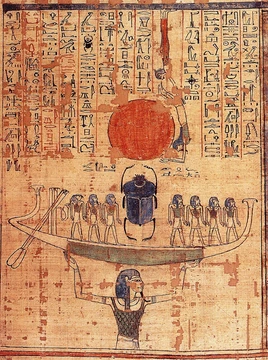
Isis
Major Egyptian goddess whose worship spread across the Greco-Roman world.

Isis was a major goddess in ancient Egyptian religion whose worship spread throughout the Greco-Roman world. She was first mentioned in the Old Kingdom (c. 2686 – c. 2181 BCE) as one of the main characters of the Osiris myth, in which she resurrects her slain brother and husband, the divine king Osiris, and produces and protects his heir, Horus. She was believed to help the dead enter the afterlife as she had helped Osiris, and she was considered the divine mother of the pharaoh, who was likened to Horus.
- Origin
- Ancient Egypt (first mentioned in Old Kingdom, c. 2686 – c. 2181 BCE)
- Role
- Major goddess; wife and sister of Osiris; mother of Horus
- Domain
- Afterlife, motherhood, magic, protection
- Worship span
- Old Kingdom through 4th–6th centuries CE
- Key center
- Temple at Philae (Egypt and Nubia)
- Known for
- Resurrecting Osiris, protecting Horus, magical power, governing nature and fate
Lore & Background
Isis was part of the Ennead of Heliopolis, born to Geb and Nut, and sister to Osiris, Set, and Nephthys. In the Osiris myth, after Set killed and dismembered Osiris, Isis and Nephthys searched for his body pieces, reassembled them, and Isis restored him to life through magical spells, conceiving their son Horus. She was the epitome of a mourning widow and her efforts became the prototype for mummification and funerary practices. She helped the dead enter the afterlife and was invoked in healing spells for ordinary people. Originally depicted as a human woman wearing a throne-like hieroglyph on her head, during the New Kingdom (c. 1550 – c. 1070 BCE) she absorbed traits from Hathor, including a sun disk between cow horns. In the first millennium BCE, Osiris and Isis became the most widely worshipped Egyptian deities, and she absorbed traits from many other goddesses. Her reputed magical power was greater than that of all other gods, and she was said to govern the natural world and wield power over fate itself. In the Hellenistic period (323–30 BCE), Isis was worshipped by Greeks and Egyptians, along with Serapis, and her cult diffused into the wider Mediterranean world. Greek devotees ascribed to her traits from Greek deities, such as the invention of marriage and protection of ships at sea. As Hellenistic culture was absorbed by Rome in the first century BCE, the cult of Isis became part of Roman religion, with festivals like the Navigium Isidis and initiation ceremonies resembling mystery cults.
Reader's Guide
Isis's significance lies in her evolution from a funerary and magical deity in early Egyptian religion to a universal goddess worshipped across the Greco-Roman world. Her role in the Osiris myth established her as a model of devotion, resurrection, and maternal protection, influencing Egyptian afterlife beliefs and royal ideology. By absorbing traits from Hathor and other goddesses, she became a composite figure embodying multiple feminine divine powers. Her cult's spread during the Hellenistic and Roman periods made her one of the most widely venerated deities of the ancient Mediterranean, with devotees found across the Roman Empire. The worship of Isis was ended by the rise of Christianity in the fourth through sixth centuries CE. Her worship may have influenced Christian beliefs and practices such as the veneration of Mary, though the evidence is ambiguous and controversial. Isis continues to appear in Western culture, particularly in esotericism and modern paganism, often as a personification of nature or the feminine aspect of divinity.
Did You Know?
- Isis's Egyptian name was written as 𓊨𓏏𓆇𓁐 (ꜣst), and its pronunciation changed over time to forms such as Rūsat, ʾĒsə, and Greek Ἶσις.
- Her hieroglyphic name incorporates the sign for a throne, which she also wears on her head; some scholars suggest she may have originally been a personification of thrones, though this is disputed.
- In the first millennium BCE, her temple at Philae was a religious center for both Egyptians and Nubians.
- Some of her devotees said she encompassed all feminine divine powers in the world.
The Osiris Myth and Divine Motherhood
Isis entered the Egyptian religious landscape during the Old Kingdom, first appearing in the Pyramid Texts as a central figure in the story of Osiris's death and restoration. Within the Ennead of Heliopolis, she occupies the final generation of divine kin, born to Geb and Nut alongside Osiris, Set, and Nephthys. As both wife and sister to Osiris, she holds the title of queen when he inherits the creator god's authority. When Set murders and dismembers her husband, Isis—along with Nephthys and deities like Anubis—searches the land for his scattered body parts and reassembles them, an act that became the mythic blueprint for mummification. Her grief, sexual longing, and even rage at his departure are all recorded in funerary texts as forces that help restore him to life. Beyond the myth, she is the divine mother of the pharaoh, who is identified with Horus, and her maternal healing was invoked in spells for ordinary people seeking recovery.
Absorption and Ascendancy
Isis's divine profile was never static. During the New Kingdom, she began incorporating attributes that had belonged to Hathor, the earlier preeminent goddess, and she was even depicted wearing Hathor's distinctive headdress of a sun disk between cow horns. By the first millennium BCE, she had absorbed traits from numerous other goddesses, and together with Osiris she became the most widely venerated pair in Egyptian religion. Rulers across Egypt and Nubia erected temples dedicated primarily to her, and her sanctuary at Philae served as a shared religious center for both peoples. Her reputed magical authority was considered to surpass that of every other deity; she was said to govern the natural world and even hold power over fate itself. What began as a relatively limited presence in royal rituals and temple rites had, over centuries, expanded into a position of supreme religious prominence, with her influence reaching from funerary magic to the governance of cosmic order.
The Greco-Roman World
When Greek settlers took hold of Egypt in the Hellenistic period, Isis's worship crossed cultural boundaries. Greeks and Egyptians alike venerated her, often alongside the syncretic god Serapis, and her cult radiated outward into the broader Mediterranean. Greek devotees layered additional attributes onto her character, crediting her with the invention of marriage and the protection of sailors at sea. As Roman culture absorbed Hellenistic traditions in the first century BCE, the Isis cult became woven into Roman religious life. Though her followers remained a minority within the vast empire, they were distributed across its entire territory. Her communities developed distinctive observances, including the Navigium Isidis festival and initiation rites that paralleled other Greco-Roman mystery traditions. Some adherents went so far as to declare that she encompassed every feminine divine power in existence, making her a universal figure rather than a specifically Egyptian one.
Name, Origins, and the Throne Question
The question of where Isis came from has long fascinated scholars, and her name sits at the center of the debate. Her hieroglyphic spelling incorporates the sign for a throne, which she also wears on her head as an identifying emblem. The throne symbol functions as a phonogram spelling the st sounds in her name, but Egyptologist Kurt Sethe proposed it also reflected a deeper connection: the Egyptian word for throne was likewise st, and he suggested Isis was originally a personification of thrones themselves. Henri Frankfort extended this idea, arguing the throne was regarded as the king's mother because of its power to transform a man into a ruler. Other scholars, including Jürgen Osing and Klaus P. Kuhlmann, have challenged this reading, pointing to phonetic dissimilarities and the absence of evidence that thrones were ever deified. Her earliest possible mention dates to the reign of Nyuserre Ini in the Fifth Dynasty, and Pyramid Texts link her to the Nile Delta region near Behbeit el-Hagar and Sebennytos, suggesting her cult may have taken root there.
Common Misconceptions (Editorial)
Isis was not originally or solely worshipped as a mother goddess; she first emerged in the Old Kingdom as a key figure in the Osiris myth, known for resurrecting her brother-husband and protecting their heir Horus. Another common misconception is that her worship was limited to ancient Egypt—according to the facts, her cult spread throughout the Greco-Roman world, was adopted by Greeks and Romans, and continued into the 4th–6th centuries CE.
Why It Matters (Editorial)
Isis endures as a symbol of resilience, magical power, and maternal devotion, embodying the ancient human desire to overcome death and protect the vulnerable. Her ability to absorb traits from other goddesses and adapt to different cultures—from Egyptian to Greek to Roman—reflects how mythology evolves to meet the spiritual and emotional needs of diverse societies across millennia.
Frequently Asked Questions
Who is Isis in Egyptian mythology?
Isis is one of the most prominent goddesses in the ancient Egyptian pantheon, serving as both the wife and sister of Osiris and the mother of Horus. She first appears in the Old Kingdom period, around 2686 to 2181 BCE, as a central figure in the Osiris narrative.
What powers and domains does Isis hold?
Isis is associated with magic, motherhood, protection, and the afterlife, and she is also credited with governing aspects of nature and fate. Her most celebrated feat is reassembling and reviving Osiris after his murder, then conceiving and shielding their son Horus.
How does Isis's story conclude in the Osiris myth?
After resurrecting Osiris and giving birth to Horus, Isis spends the rest of the narrative raising and protecting her son as he matures to challenge Set for the throne. Her role as a nurturing, fiercely protective mother defines the ending of her arc.
Why is Isis considered so important in Egyptian religion?
She was regarded as the divine mother of the living pharaoh, who was identified with Horus, making her a central figure in royal legitimacy. Her cult also expanded far beyond Egypt, spreading throughout the Greco-Roman world and remaining active from the Old Kingdom all the way into the fourth through sixth centuries CE.
Where was the main center of Isis worship?
The principal temple dedicated to Isis stood at Philae, located in Egypt and Nubia, and served as the focal point of her cult for over two millennia. This site remained a major pilgrimage destination well into the late Roman and early Christian periods.
Spotted an error? Know more?
This is a living reference — every entry is fact-audited, and reader corrections feed straight into our audit queue. Suggest an edit · See this site's audit record